
Not all embroidery is the same
What nine months of embroidery study taught me about thread choices, small sequins, seed beads, and the importance of sampling a design.
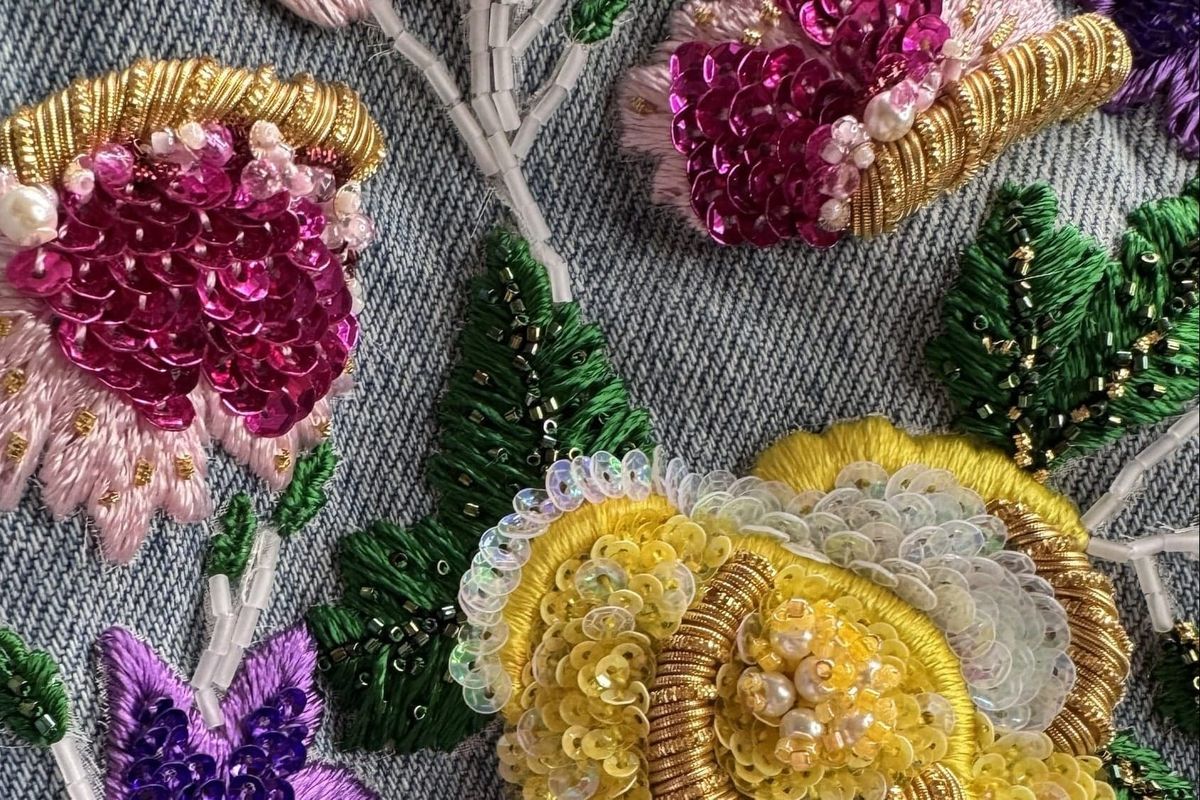
Social networks offer many amazing examples of embroidery. People use it as wall décor or as jewelry. There are also a lot of short and long tutorials showing how to create a rose flower, leaf or any other décor.
I have recently spent 9 months learning Contemporary embroidery with one of the most distinguished embroidery schools in Europe – Hand & Lock, London. While I still need to create five pieces to get my Embroidery Diploma, I decided to share some of the major differences that differentiate professional embroidery from embroidery as a hobby. I definitely do not want to underestimate the craft and skills of embroiderers of any kind. I adore each one of my fellow crafters. Every piece of art made with hands is precious.
However, I still thought that writing about differences is interesting for our blog readers.
The first difference is that ultimate majority of haute couture embroider is made with one strand of embroidery thread. Every stitch, every French knot, every silk shading element is always one strand of thread.
Thread Choices in Couching and Goldwork
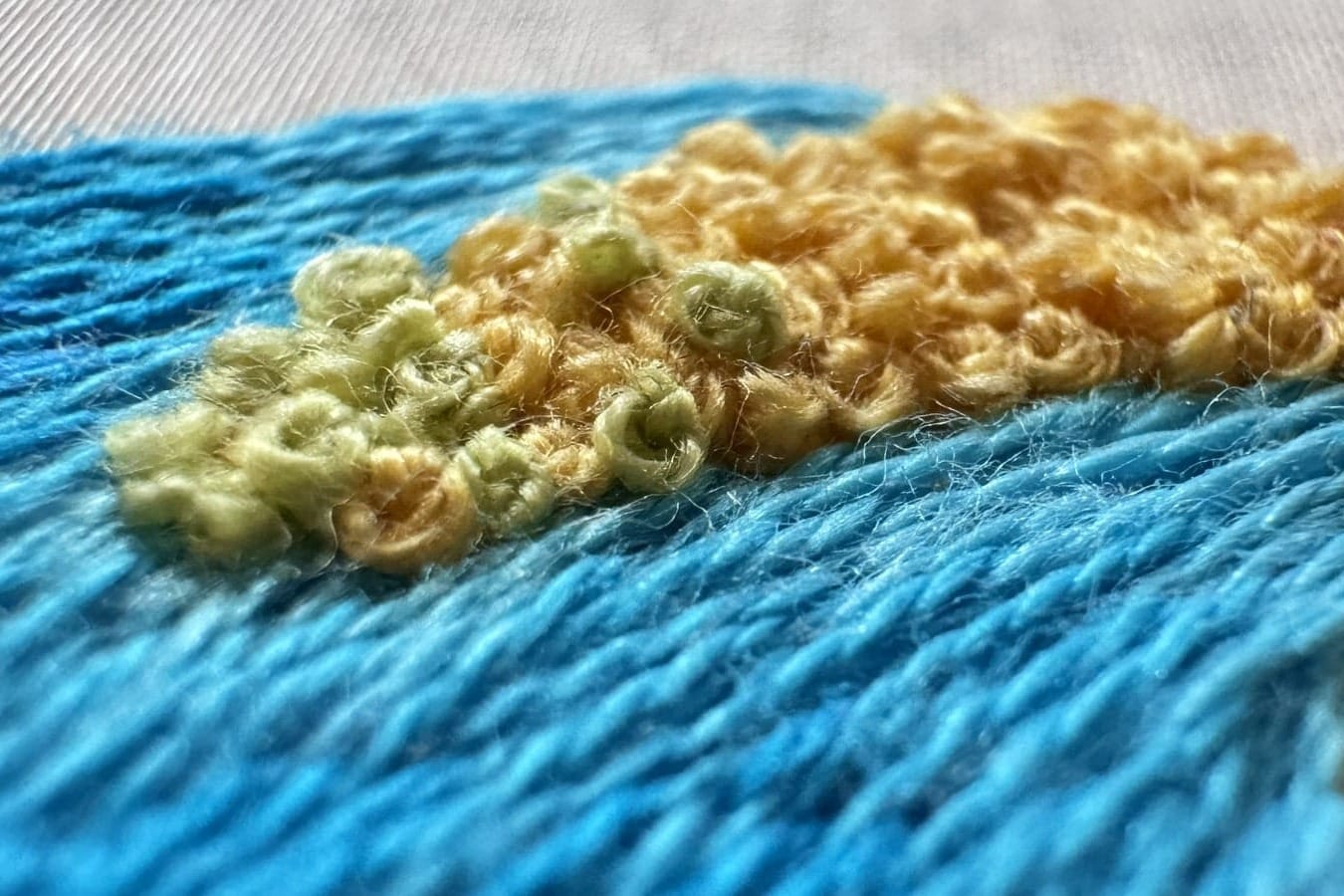
There are some techniques where two strands are used, but this is usually done intentionally, when the color of the embroidery thread shall be enhanced to create a particular effect. This is applied in couching (a technique where one thread is attached with the help of another thread). Double strand can also be used in goldwork, when two strands make the color more visible while embedded into a piece of metal purl.
From Single-Strand Stitching to Sequin Embroidery
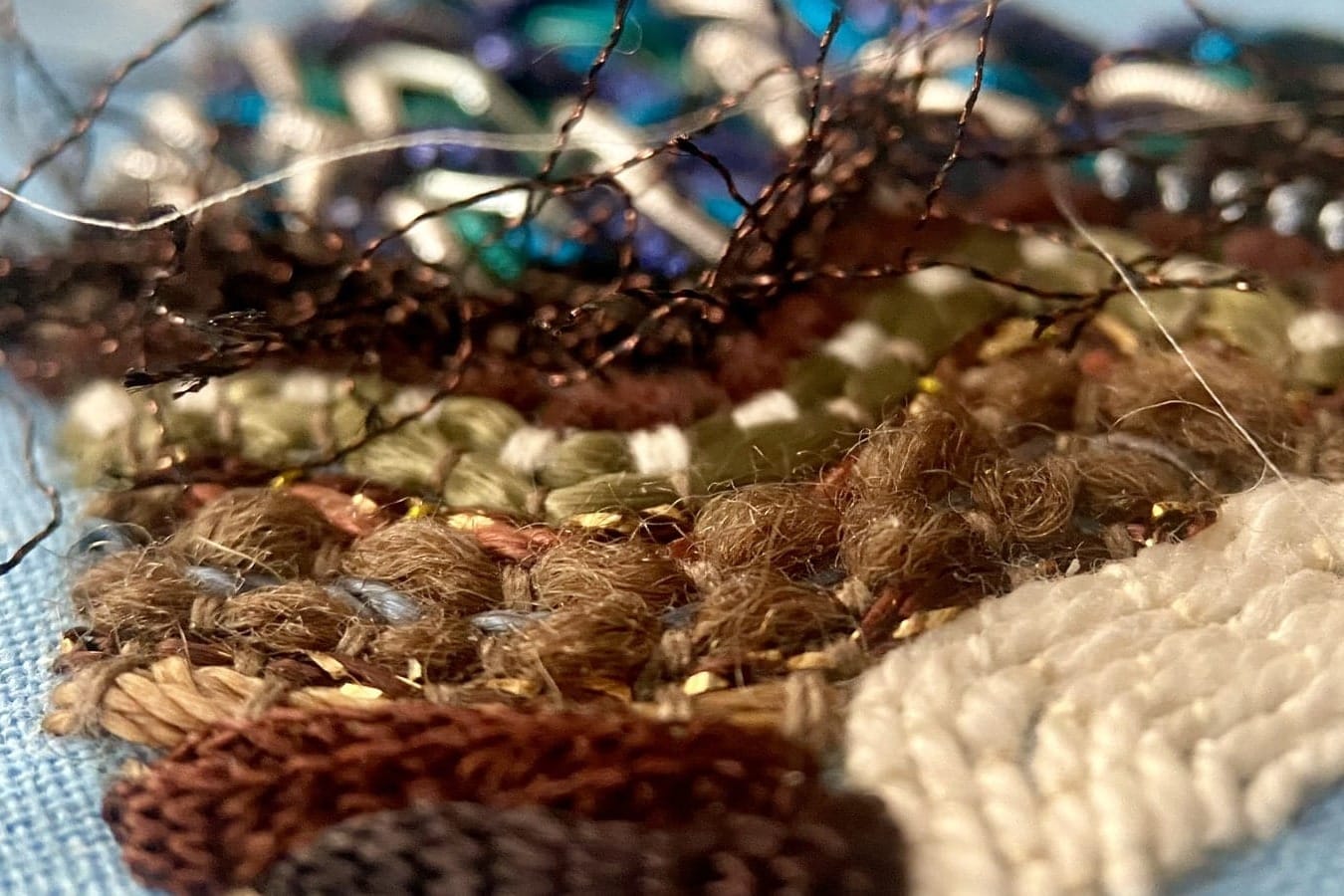
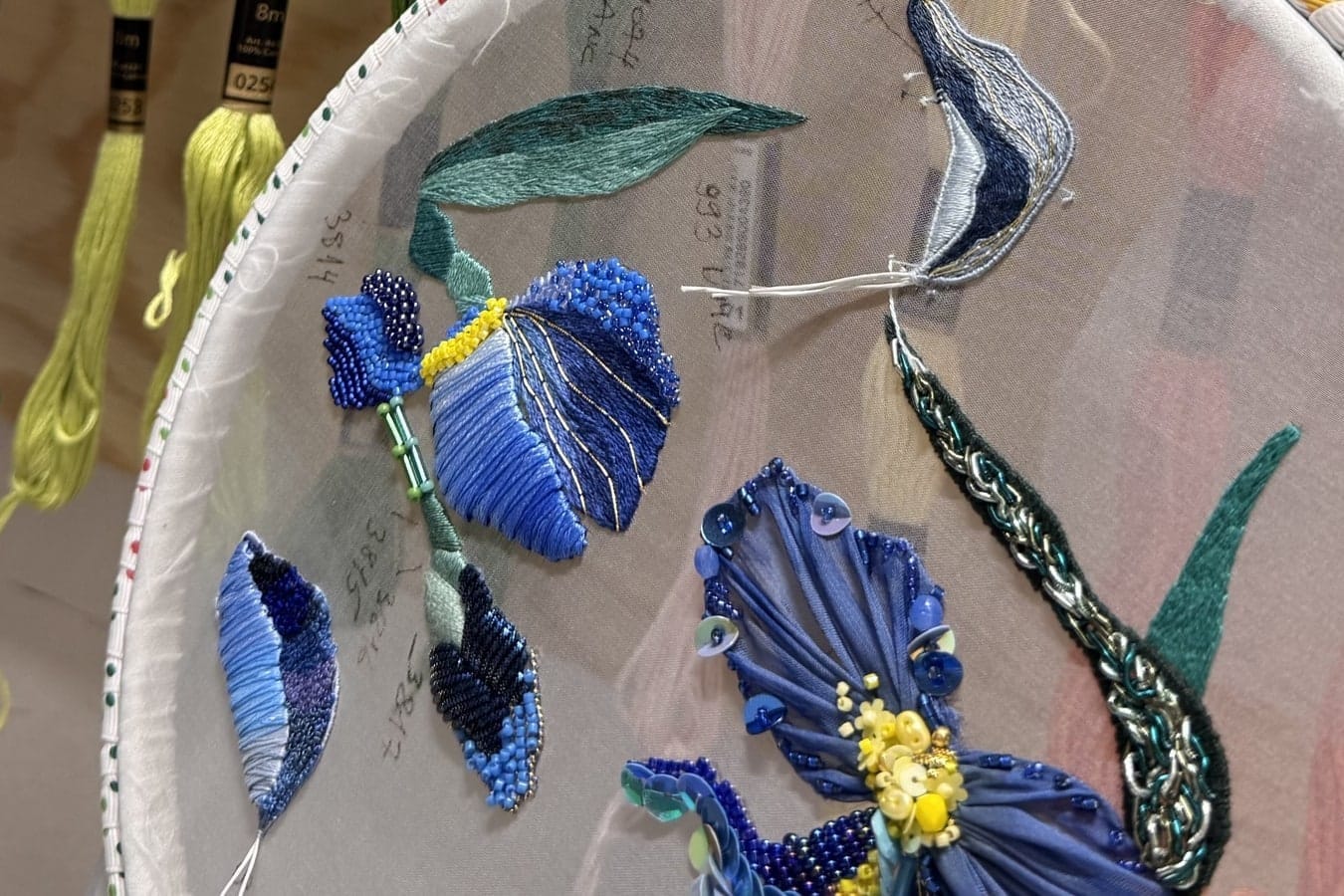
But in the majority of professional embroidery techniques, one strand is used. For example, the embroidery of the petal of an Iris flower below is all done using one strand of the embroidery thread.
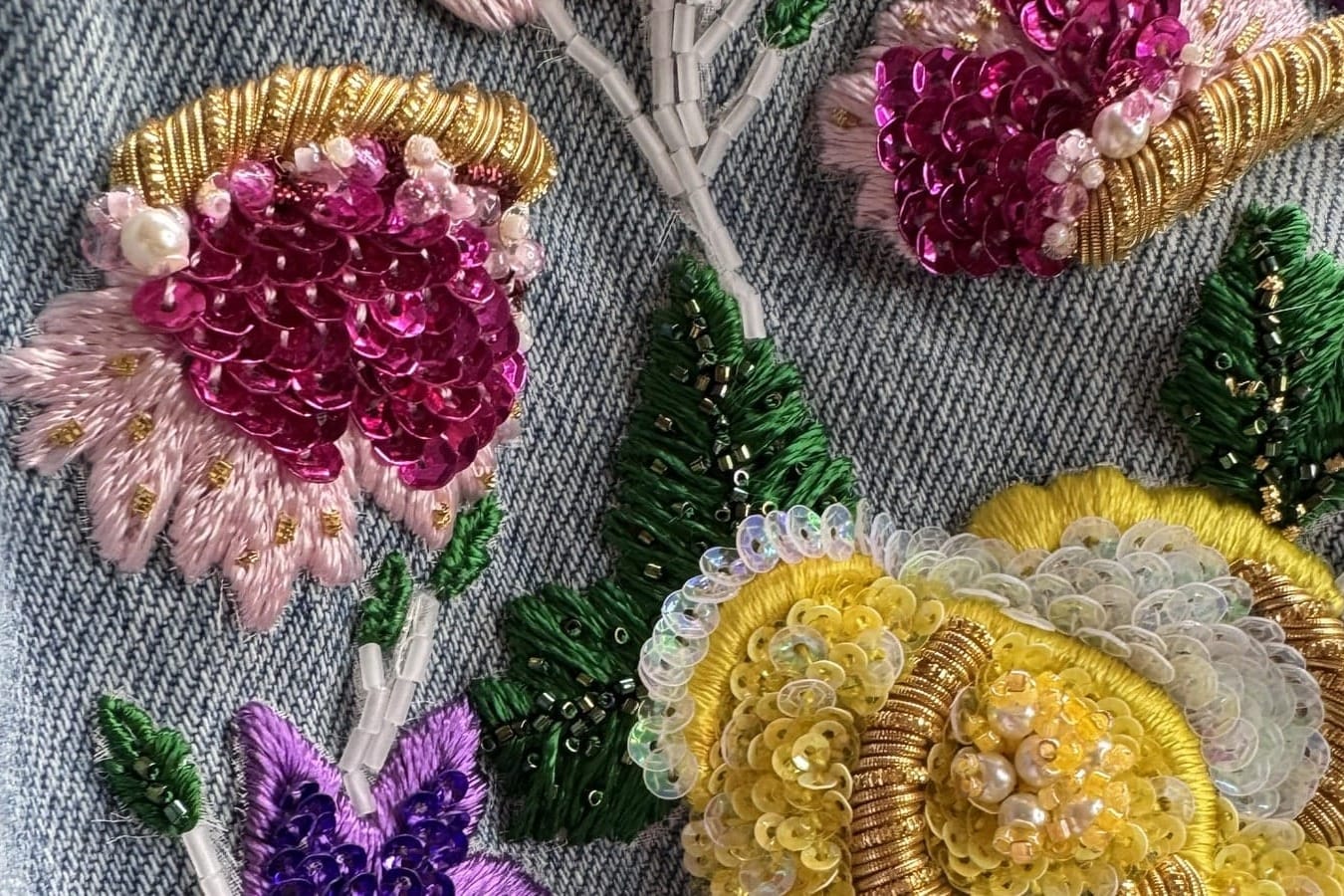
The second difference, which came as a surprise to me, was sequins. I have been using sequins for many of my previous jewelry creations – brooches, bracelets, earrings, and even pendants. And I have been purchasing sequins from different places and indeed have a collection. But during my studies, I found out that in haute couture embroidery, only the smallest sizes of sequins are usually used. The school I have been learning at works with several haute couture houses, and for all of their work they use sequins of size 2 mm, 3 mm, 4 mm, or at most (!) 5mm. If I go to my common online jewelry and embroidery supplies shopping destinations, I will see sequins that are 6- 10 mm, but now I know that these are rarely used.
Another view on sequins and their professional usage is the way they are sold. If sequins are sold in a plastic bag and not on a string, they were likely not intended for the main professional embroidery technique: the Luneville hook. Sequins sold for professional embroiderers are usually put onto a string, as this is how they are applied using a Luneville hook.
Choosing Seed Beads for Embroidery
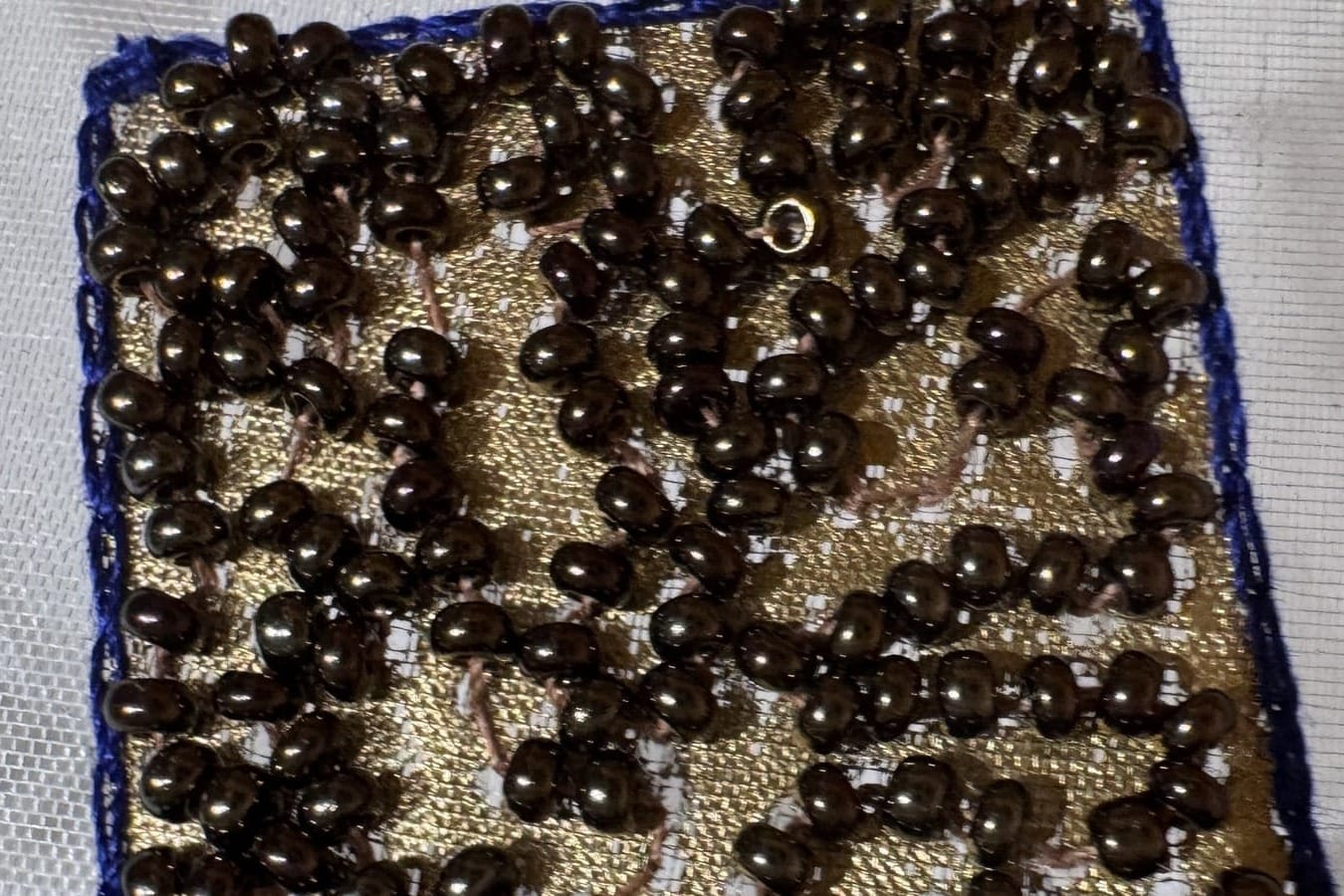
The third difference I found interesting is the seed beads used in the embroidery. As someone who has worked with beads for years, I am very used to Miyuki Delica beads. I adore their high quality, variety of colors, and finishing. However, in haute couture embroidery, they are rarely used. Maybe it is due to their specific cylindrical shape, which is wonderful when you bead a bracelet, but is less important when you embellish the center of an embroidered flower with beads. Anyhow, beads used in embroidery are regular seed beads. Usually, they are size 11 because, again, they need to fit on a Luneville hook’s needle. The one most commonly used in professional embroidery is size 70.
Designing and Sampling Embroidery
And, of course, last but not least is the design approach. This is something I am still learning. Creator has a great choice: various types of fabrics, thousands of bead types, thousands of sequins, and thousands of threads, including various types of threads. On top of that, there is goldwork, appliqué, felt, the ability to create volume or 3D shapes, and so much more. At the beginning of the learning process, and during my first attempts to create designs, I was tempted to apply everything I learned. But too many different techniques within one creation affect the balance, harmony and beauty of the final result. That’s why the sampling process is an obligatory part of our studies. Only by testing and trying various techniques’ combinations can you see if your result is truly balanced, if it misses something, or if (as it more often happened with me) it requires removal of some techniques or materials. When creating a design, the creator also needs to consider how this design will be used, from what distance people will look at it, and whether there willbe some specific light applied. Within the jewelry piece, I will use fewer techniques, but will be much more focused on the quality of every detail. Within the interior piece of embroidery, I will apply more sparkling materials and create more voluminous shapes for them to stand out from the background, which I have chosen.
This is what I have learned so far: single strand of embroidery thread, small sequins, use of the Luneville hook, and seed beads. Now it is time to start embroidering my five pieces for Diploma distinction. Actually, I have already started.
Embroidery as a Hobby or a Profession
And what are your thoughts on the differences between embroidery as a hobby and embroidery as a profession?