
Finding the "Right" Needle: How I Chose My Couture Embroidery Path
When it comes to professional embroidery education, the options are surprisingly limited. From the silk shading of the East to the couture houses of Paris, here is how I found the perfect path at Hand & Lock.
This is the second post in my series about diving headfirst into the world of professional couture embroidery.
In my first post, I talked about why "learning embroidery" isn’t just about rocking chairs and cross-stitching puppies (though I still have a soft spot for them!). My personal "rabbit hole" led me somewhere much more structural and avant-garde.
Today, I want to share the "where" and the "how." How did I choose where to study? As it turns out, the more I looked, the more I realized that while the world of embroidery is vast, the path to a professional diploma is surprisingly narrow.
East or West: A Tale of Two Traditions
When you start looking into serious embroidery education, the world essentially splits into two hemispheres.
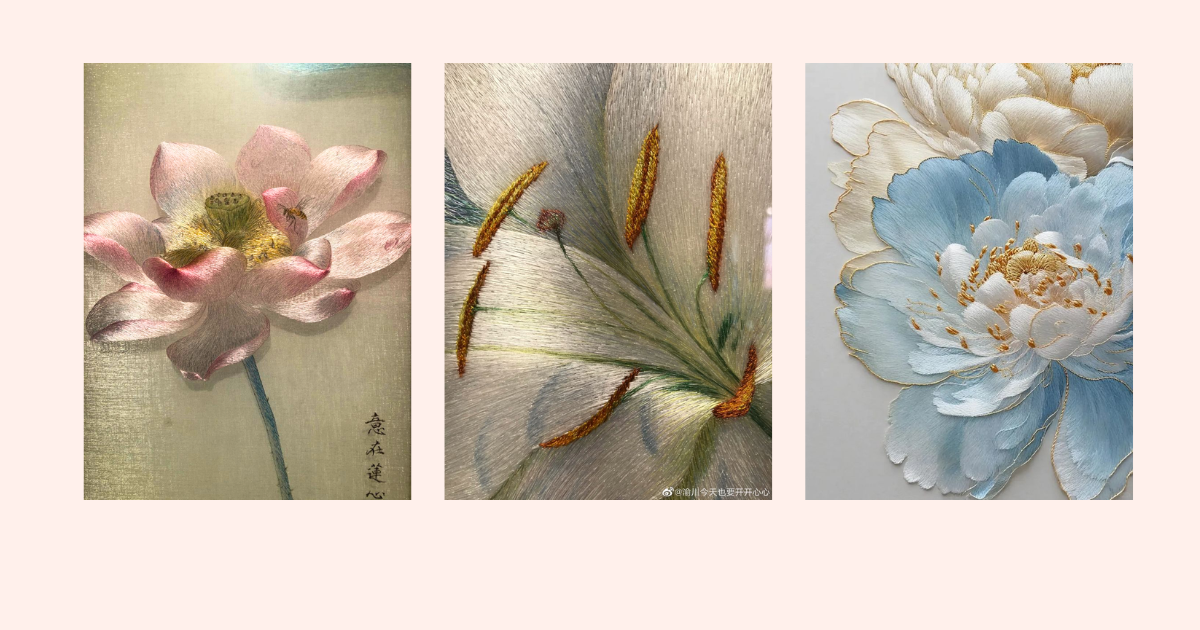
On one side, you have the East - specifically Japan and China. Their silk embroidery is breathtaking. It’s essentially "painting with thread," achieving a level of detail in birds, flowers, and landscapes that feels almost impossible.
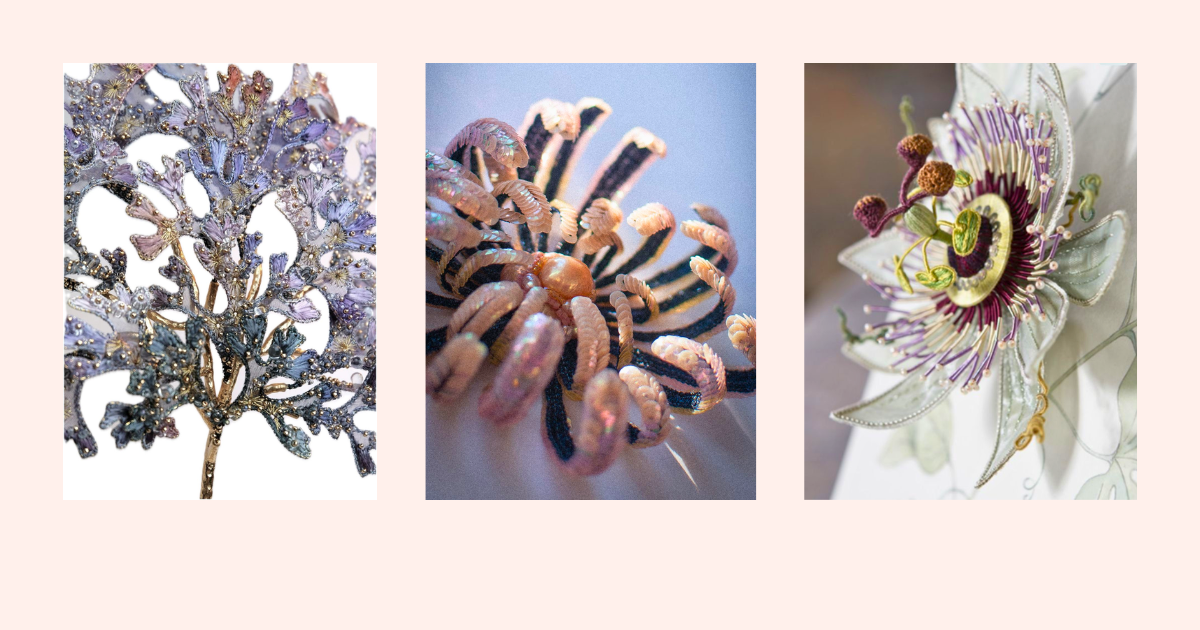
However, as magical as silk shading is, it wasn’t what I was looking for. My interest in embroidery grew out of my work with jewelry. I didn’t just want to create a picture on a flat surface; I wanted to create volume. I wanted to build wings, petals, and 3D objects using beads, sequins, wires, and padding. I needed a structural craft, not just a decorative one.
The European Giants: France, Britain... and the Italian Mystery
In Europe, the "Couture" crown is held by France and the UK. I’m often asked why Italy—the home of so much high fashion—isn’t the obvious answer. While Italy has incredible ateliers, the most structured, world-renowned diploma programs are concentrated elsewhere.
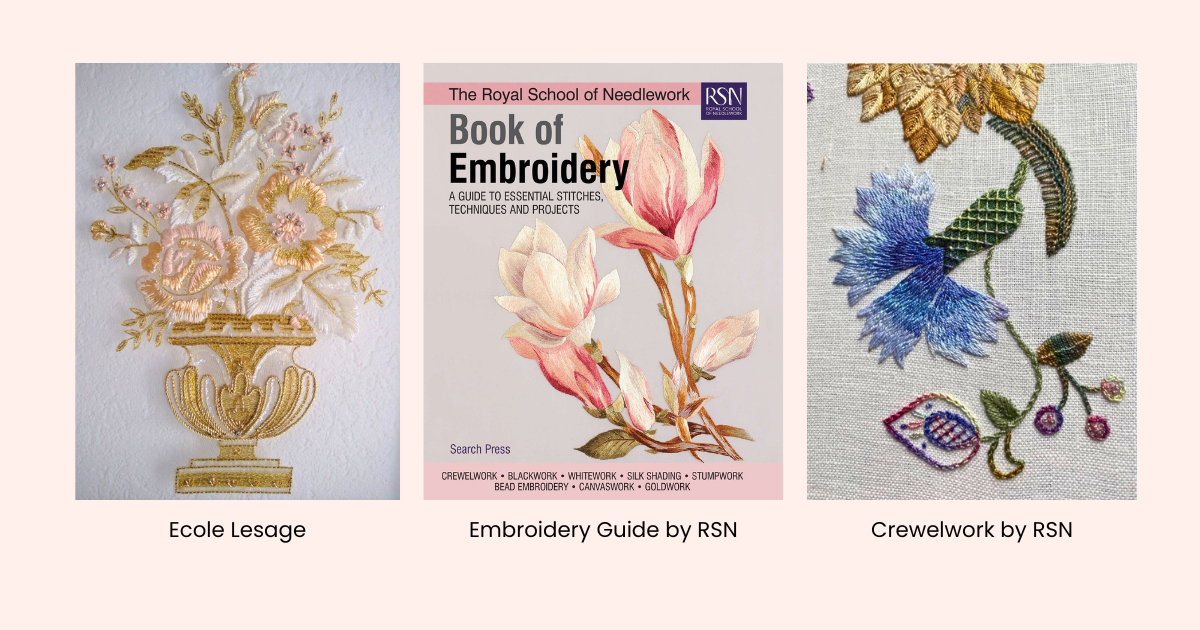
1. École Lesage (Paris)
The name speaks for itself. It’s legendary. However, for a student like me, there were two hurdles:
- The Logistical Barrier: A full diploma requires being physically in Paris. When you add Paris rent to the tuition fees, you’re looking at a budget roughly the size of a new economy car.
- The Style: Lesage is the gold standard for classical European tradition. It is beautiful, but I was looking for something more experimental and contemporary—techniques that could bridge the gap between fashion and modern interior objects.
2. Royal School of Needlework (UK)
The RSN is a powerhouse of knowledge. I already use their "Stitch Bank" and own several of their books. Many of the tutors I admire graduated from here. But their diploma path is a multi-year, university-level commitment that requires significant in-person attendance in the UK. For my current life and business, it just wasn't a match.
Why Hand & Lock Was the "Perfect Fit"
After all that research, I found Hand & Lock. I’ll dive deeper into their history in my next post, but here is why they won me over:
- The Digital Transition: Their program is available online. This was a complete game-changer for me.
- Modular Freedom: You can take it one step at a time. Of course, I looked at all five modules and thought, "Yes. All of them. What could possibly go wrong?" I am currently in a state of mild shock, but let’s call it "character development." 🤪
- Creative Liberty: While you must master specific techniques, you aren't forced into a "strict cage." You are encouraged to experiment with materials and invent your own solutions.
- The "Contemporary" Focus: The diploma is literally called Contemporary Embroidery. It focuses on how these stitches live today—in fashion, jewelry, and interiors.
More Than Just a School: The Working Atelier
One thing I find fascinating about all these institutions—Lesage, RSN, and Hand & Lock—is that they aren't just schools. They are working ateliers.
They don't just teach theory; they produce embroidery for real luxury fashion houses and royal commissions. There is no single "system" for how fashion houses choose their ateliers—it’s a world of relationships and secret techniques—but studying with a school that actually does the work makes the learning feel alive. You aren't studying historical artifacts; you’re studying a living, breathing craft.
The Verdict
Hand & Lock sat right at the intersection of everything I needed: online accessibility, professional structure, and the freedom to experiment. It aligns with my goals for Ornamentico and the kind of contemporary work I want to bring you.
What’s next? In my next post, I’ll take you inside the history of Hand & Lock and break down the five modules I’m currently tackling.
If you missed the start of this journey, you can catch up here: Why I’m Studying Couture Embroidery