Why I’m Studying Couture Embroidery (And What It Really Is)
A personal introduction to couture embroidery, exploring the techniques involved and sharing my journey through a professional diploma program.
A recent conversation with a former colleague reminded me that I should clarify exactly what I am currently studying.
When I mention I’m studying embroidery, most people picture something quite straightforward - perhaps someone leisurely sitting in a rocking chair, creating cross-stitch patterns of dogs, butterflies, or flowers. Naturally, they inquire:
Why would you need to study something like that?
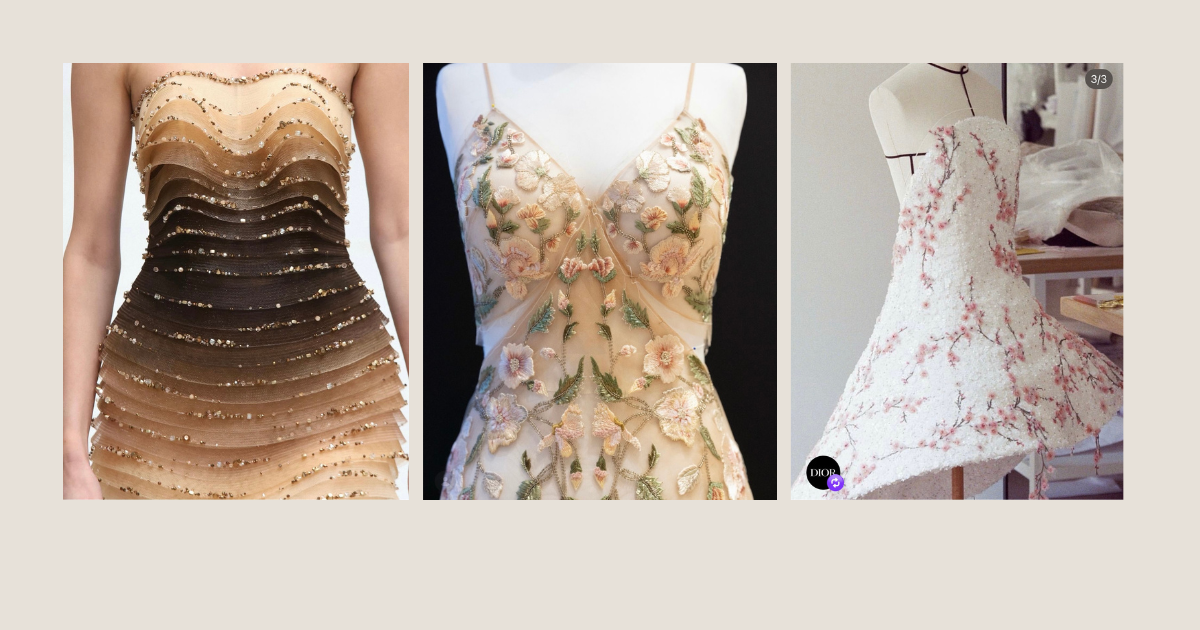
While cross-stitch is charming, my current focus is entirely different. I am delving into couture embroidery - a specialized form of hand embroidery employed in high fashion, art, and design.
What Is Couture Embroidery?
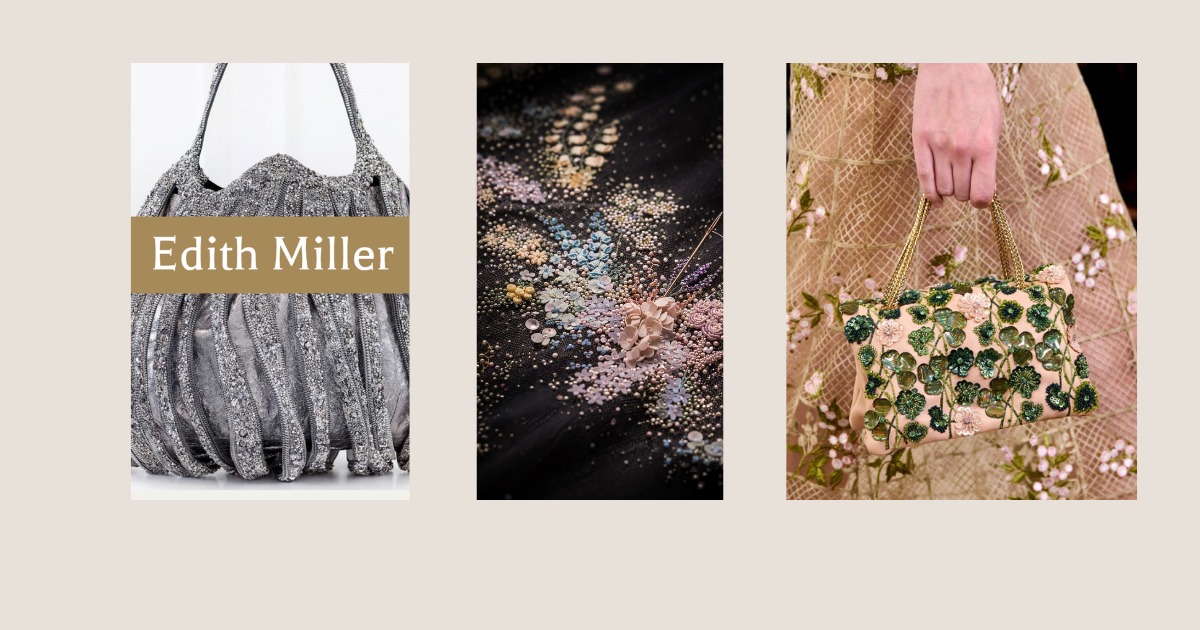
Couture embroidery is a highly skilled craft grounded in traditional techniques, frequently showcased in luxury fashion. If you’ve ever observed runway shows by brands such as Chanel, Dior, Dolce & Gabbana, or Alexander McQueen, you’ve likely seen the intricate and opulently decorated garments they present. Beads, sequins, silk flowers, and crystals adorn these creations at every turn.
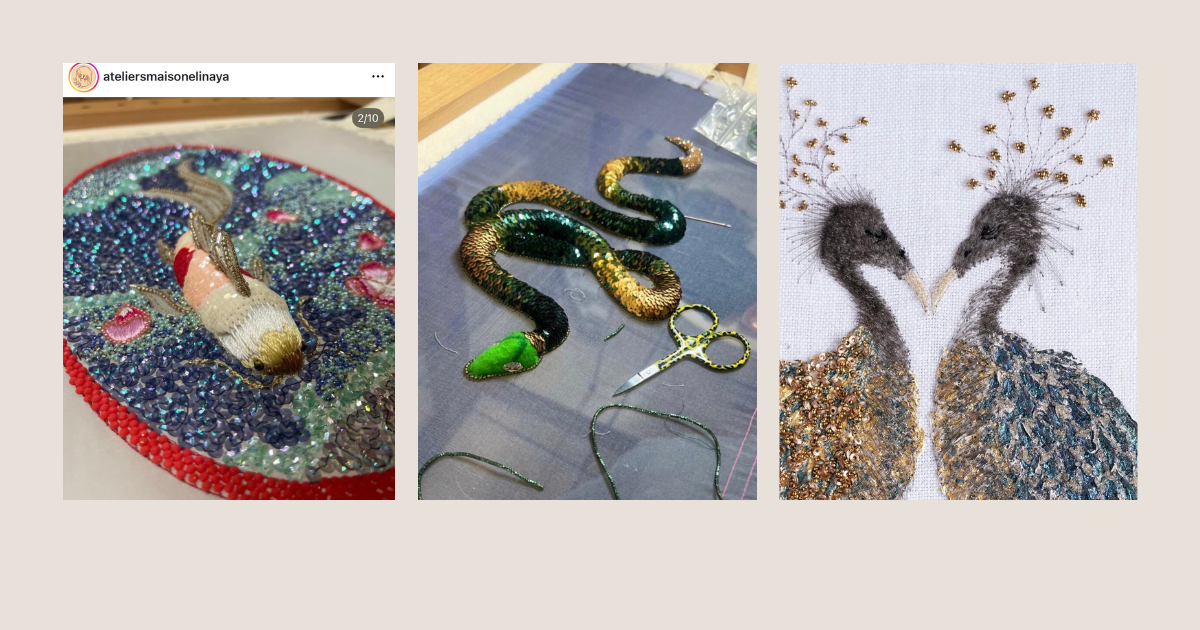
What many don’t realize is that most couture embroidery is crafted entirely by hand. Skilled artisans meticulously apply every bead, stitch, and appliqué, typically using either a traditional needle or a Lunéville hook - a specialized tambour hook for attaching beads and sequins from underneath the fabric.
While machine embroidery exists, in couture work, hand embroidery remains the standard.
Why I Started Learning Couture Embroidery
This post is the first in a series where I’ll be documenting my studies.
I’ll be sharing:
- How I got into couture embroidery
- What the learning process actually looks like
- Complex techniques and materials
- My own designs and projects
- And sources of inspiration
It might not be interesting to everyone, but since I find it truly fascinating, I want to share my experience. 🤪
My Contemporary Embroidery Diploma
I’m currently pursuing the Contemporary Embroidery Diploma - and yes, a diploma is the main point here. It’s a structured, professional program focused on couture embroidery.
Here’s a quick overview:
- Duration: 9 months of structured study
- Modules: 5 specialized modules
- Each module: 3 months of guided classes
- Final projects: 5 (one per module)
- Completion timeline: up to 2 years after completing the coursework
I’m studying online through Hand & Lock, one of Europe's oldest embroidery schools, founded in the 18th century.
In future posts, I’ll talk about:
- Why I chose this school and what makes its approach to couture embroidery unique
- What each module covers, from foundational techniques to advanced applications
- What I plan to create as part of my diploma projects
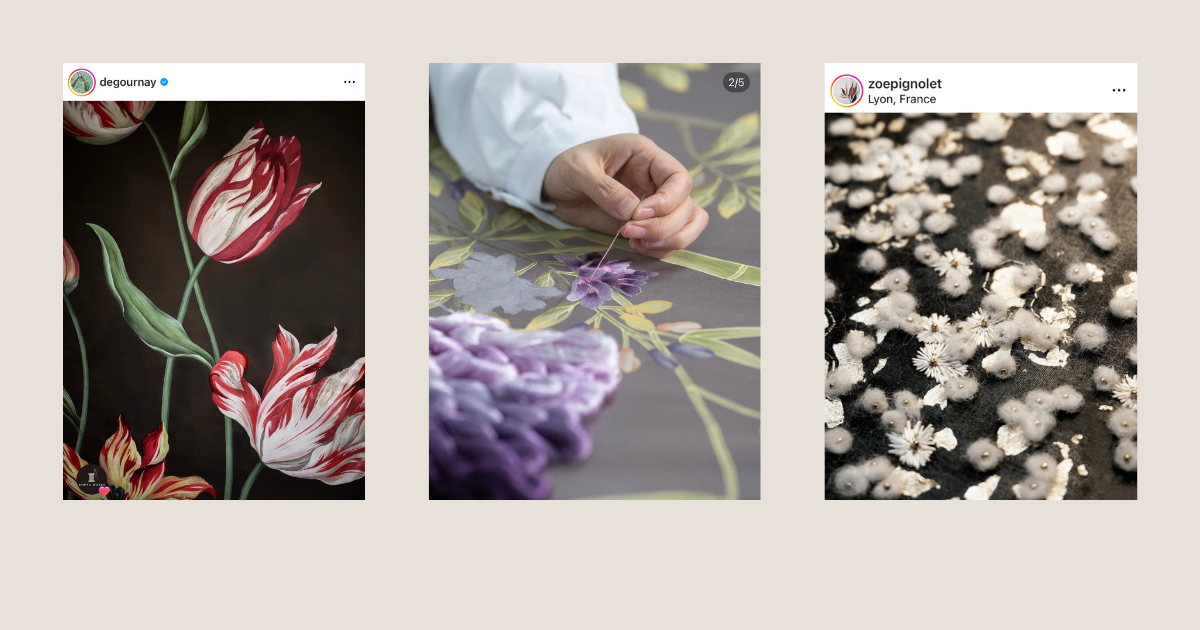
Where Couture Embroidery Is Used
Couture embroidery isn’t just for clothing. It’s a versatile art form that finds its place in many creative fields:
- Fashion and haute couture garments, where embroidery defines texture and detail
- Accessories, including bags, belts, and gloves
- Jewelry design, combining embroidery with wearable art
- Interior design, including textiles, wall art, and decorative surfaces
- Fine art and installations, where embroidery becomes a medium of expression
- Furniture embellishment, adding handcrafted detail to functional objects
In essence, it blurs the lines between craft, design, and art. That’s exactly what I’m learning to create.
A Reality Check
After finishing the first three modules, I no longer wonder,
“Why do they give two full years to complete the final project?”
Instead, I find myself asking,
“Can I actually finish all my designs within those two years?”
The level of detail, time, and precision required in couture embroidery is much more intense than I initially thought.
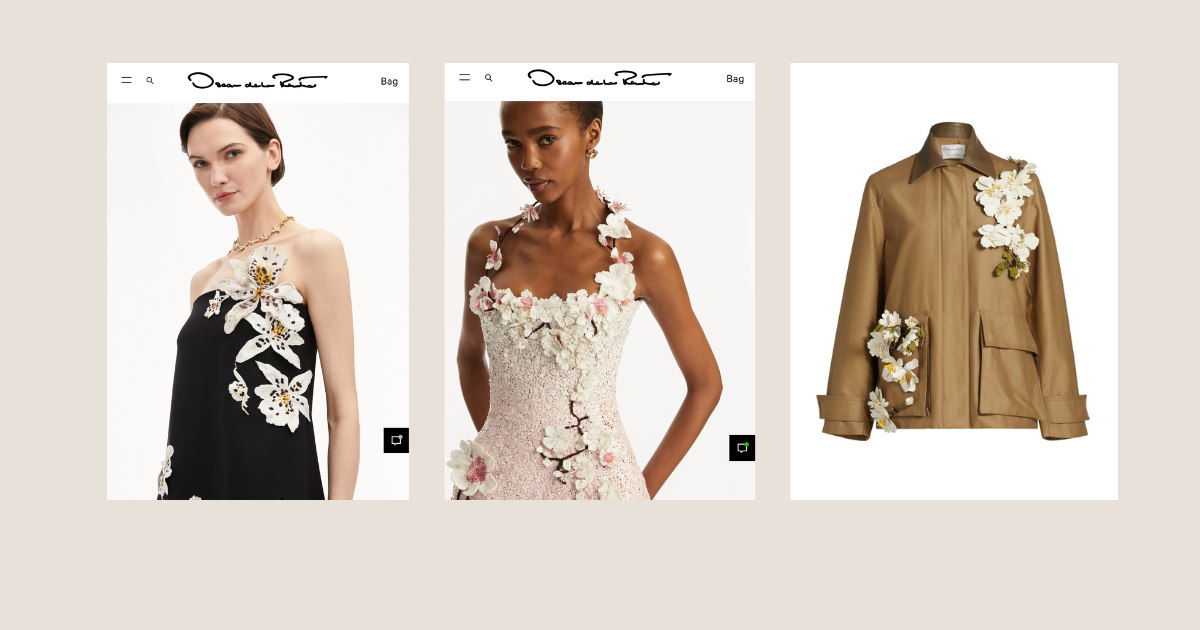
What’s Coming Next
In this series on the Contemporary Embroidery Diploma, I will examine different aspects, including the structure of each module, explore specific embroidery techniques such as Lunéville work and bead embroidery, share my approved designs, and showcase the creative process behind them.
I’ll also showcase some truly astonishing pieces — including ones that sound almost unbelievable, like hand-embroidered silk wallpaper.
If there’s something you’d love to hear more about, just ask! I'll do my best to include it in future posts.
Related reading: How My Couture Embroidery Diploma Actually Works