
Why Match & Stitch Starts with DMC, Anchor and Miyuki Delica
Match & Stitch began with an ambitious four-range plan. Here is why the first release focuses on DMC, Anchor, and Miyuki Delica - and why Toho needs its own careful next step.
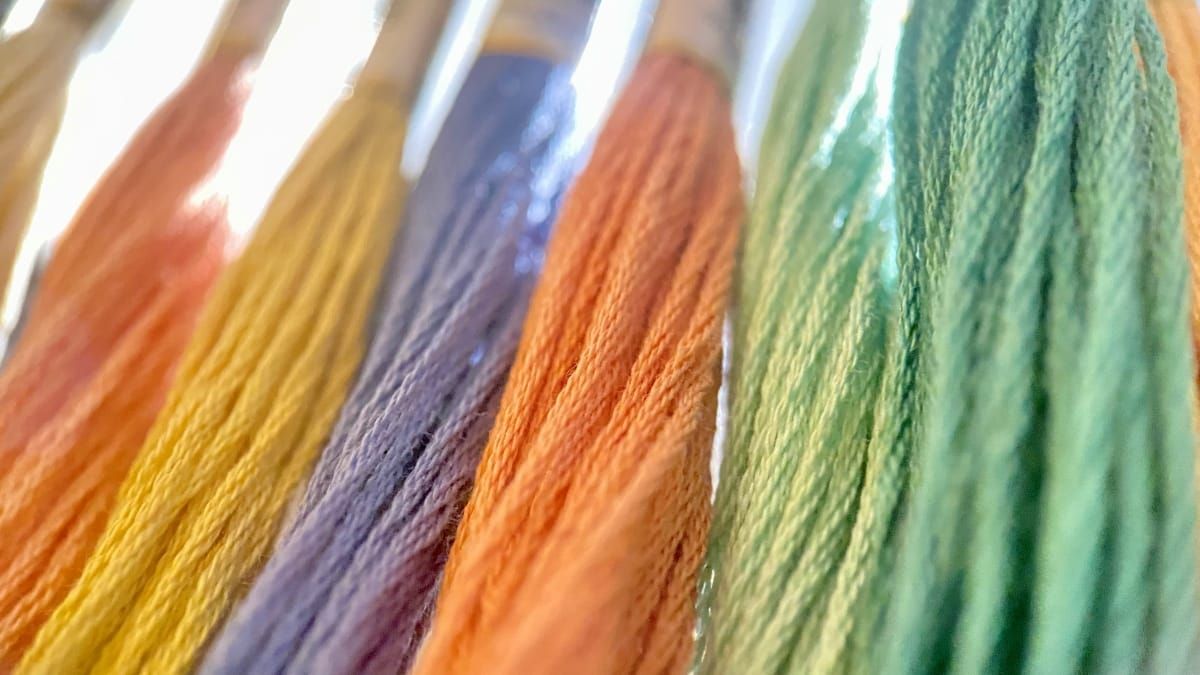
When we first planned Match & Stitch, the scope seemed straightforward. We wanted to compare two embroidery-thread ranges, DMC and Anchor, with two bead ranges, Miyuki Delica and Toho. Four established ranges seemed like a sensible starting point.
Then we mapped the work behind a single reliable match.
There were hundreds of thread shades, many more bead color-and-finish combinations, inconsistent digital representations, and the practical problem that real materials do not behave like flat colors on a screen. What had looked like one database quickly became a research project.
We had to make an early product decision: cover everything lightly, or begin with fewer ranges and examine them properly. We chose the second approach.
The thread ranges already set a serious baseline
DMC describes its stranded embroidery thread as available in more than 500 colors. Anchor lists 444 solid colors for Stranded Cotton, as well as 16 ombre and 24 multicolor shades.
Those figures show the scale, but a shade count is only the first layer. For each thread, we need to identify the manufacturer's code and naming, connect the available digital information with the physical material, and decide how confidently that information can support a comparison.
That last point matters. A color value found online may be useful as a reference, but it is not automatically an accurate representation of the skein in a maker's hand. Screens, photography, lighting and source data can all change what we see.
Beads add finish, light and material behavior
Bead color cannot be understood as a flat swatch either. Transparent, metallic, lined, matte, lustered and coated finishes interact with light in different ways. Two beads that appear close in base color may feel very different beside embroidery thread.
The same bead may also look different in a catalog image, on a monitor and in a box on the worktable. That makes finish information and physical comparison essential parts of the matching process.
It is also why we are not using one headline number for all Miyuki Delica or Toho colors. Current official catalogs organize products across different sizes, finishes and series rather than presenting one stable consolidated total that we can cite with confidence.
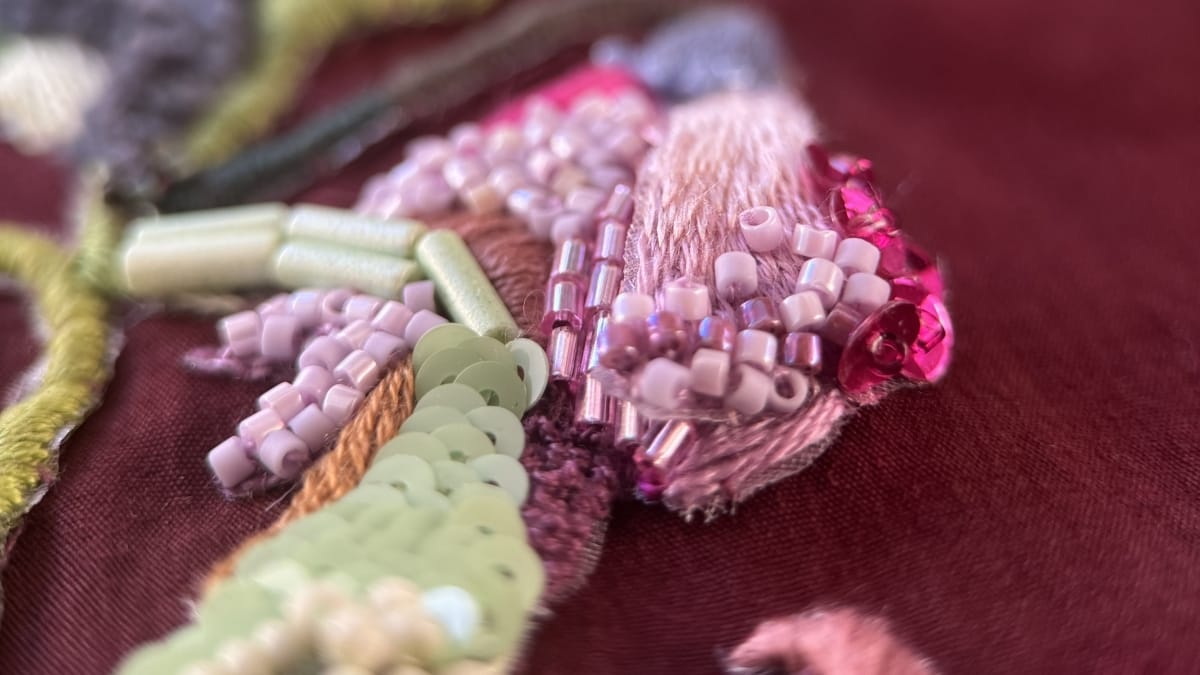
Why Miyuki Delica came first
Miyuki Delica was the practical starting point because it is the bead range our founder uses most often in her own embroidery and jewelry work. That experience provided a real working context: physical materials, finished pieces and an understanding of how different finishes behave.
This is not a claim that one bead brand is universally better than another. It is a decision to begin with the range we know most closely, so the first version can be built from observed practice rather than a catalog alone.
Even with the scope reduced to DMC, Anchor and Miyuki Delica, comparison and matching took more than four months. That time confirmed that depth was not a luxury; it was necessary.
Why Toho is still part of the conversation
Leaving Toho out of the first version does not mean that it is unimportant. It means the range deserves the same careful treatment rather than being added as an incomplete extra.
We hope to add Toho later. Before doing that, we need to define a useful starting scope, review the relevant size and finish families, and validate the data and physical comparisons with the same care used for the first three ranges.
What a focused first version gives makers
A color-matching tool is useful only if it reduces searching and guessing without hiding its own limitations. Starting with three ranges gives us room to inspect the source data, compare real materials, document the reasoning and improve the experience before expanding it.
Match & Stitch is being created for serious embroiderers, beaders, textile artists, jewelry makers and craft businesses who work across thread and bead systems. It will not replace a maker's judgment or the effect of viewing materials in real light. The aim is to provide a stronger, faster starting point.
For the first release, that means DMC, Anchor and Miyuki Delica: a narrower foundation researched with care.
Help us decide what comes next
If you work with Toho, which bead size or finish family would be most useful for us to prioritize first? We would also like to know what makes thread-to-bead color matching most difficult in your own work.
Follow Match & Stitch on social media for launch updates and the first look at the tool.
Instagram | Facebook | LinkedIn | Reddit | Pinterest
Next in this series: how we compared the materials and developed the matching process.
Related reading: Why We Built Our Own Thread-to-Bead Color Database
Frequently asked questions
Why does Match & Stitch start with DMC, Anchor, and Miyuki Delica?
Those three ranges give a serious, widely used baseline for embroidery threads and cylinder beads. Starting focused produces more reliable matches than spreading thin across every thread and bead line at once.
Why Miyuki Delica before Toho?
Miyuki Delica’s consistent cylinder shape and color system makes side-by-side matching more controllable for a first catalog. Toho stays in the conversation for later expansion.
Will Toho beads be included later?
They’re part of the longer plan. The first version prioritizes DMC, Anchor, and Miyuki so makers get a usable reference sooner—then we can grow the ranges with the same method.