
How to Start a Peyote Stitch Bracelet With Just One Bead
If the first row of peyote stitch always feels confusing, this tutorial is for you. Based on my video “How to Start a Peyote Bracelet With Just One Bead!”, this guide shows a calmer way to begin a flat peyote stitch bracelet, with clear steps, materials, and tips designed for relaxed, adult beaders.
If you’re curious about peyote stitch beading but always get stuck at the very beginning, you’re not alone.
Most peyote bracelet patterns tell you: “String the first two rows, fold them, and start stitching.” On paper, it’s simple. In real life, beads slide, the thread twists, and the first row seems to have a mind of its own—especially if your eyes or hands aren’t as patient as they used to be.
In my video “How to Start a Peyote Bracelet With Just One Bead!”, I show a calmer way to begin: instead of fighting a long base row, you build your peyote stitch bracelet from a single bead upwards.
This post is a written companion to that video, created especially for women who want a relaxing, step-by-step entry into beginner peyote stitch.
What makes peyote stitch special?
Peyote stitch is one of the classic bead-weaving techniques:
- In flat peyote stitch, the beads sit in a brick-like pattern, creating a soft, flexible strip perfect for seed bead peyote bracelets.
- You’ll often see patterns written for Miyuki Delica beads because they’re very consistent in size and shape, which keeps the bracelet edges neat.
Most bracelet designs use one of two variations:
- Even count peyote stitch – an even number of beads per row; turning is easy and very beginner-friendly.
- Odd count peyote stitch – an odd number of beads per row; it needs a special little turn at one edge, but allows perfectly centered motifs.
Once you master the start, both styles open the door to countless peyote stitch bracelet patterns and designs.
Why the usual first row feels so frustrating
Traditional peyote stitch bracelet tutorials usually ask you to:
- String a long line of beads (often two full rows).
- Fold them carefully.
- Try to see which bead is “up” and which bead is “down” while you hold your breath and hope nothing falls off.
For many beaders, especially over 35, this is the moment when:
- Beads slip off the thread.
- The pattern is hard to see.
- Shoulders and neck tense up from leaning in too close.
No wonder lots of people think peyote stitch is “too hard” and give up.
The one-bead start from the video works differently. You build the structure slowly, from one bead, then two, then three, until you have a stable base. No wrestling with a long, wobbly strand.
Materials you’ll need
You can use this method for many peyote stitch bracelet patterns. It works especially nicely with Miyuki Delica or uniform seed beads in size 11/0.
Beads
- Miyuki Delica 11/0 or other size 11/0 seed beads
- 2–4 colours if you’re working from a simple peyote bracelet pattern (stripes, checks, or florals)
Thread & needle
- Beading thread such as Miyuki, FireLine, WildFire, or strong nylon beading thread
- Beading needle size 10–12
Other
- Scissors
- Bead mat or soft cloth (so beads don’t bounce away)
- Good light (daylight or a lamp is a must for tired eyes)
- Optional: printed peyote bead pattern or chart for the bracelet you want to make
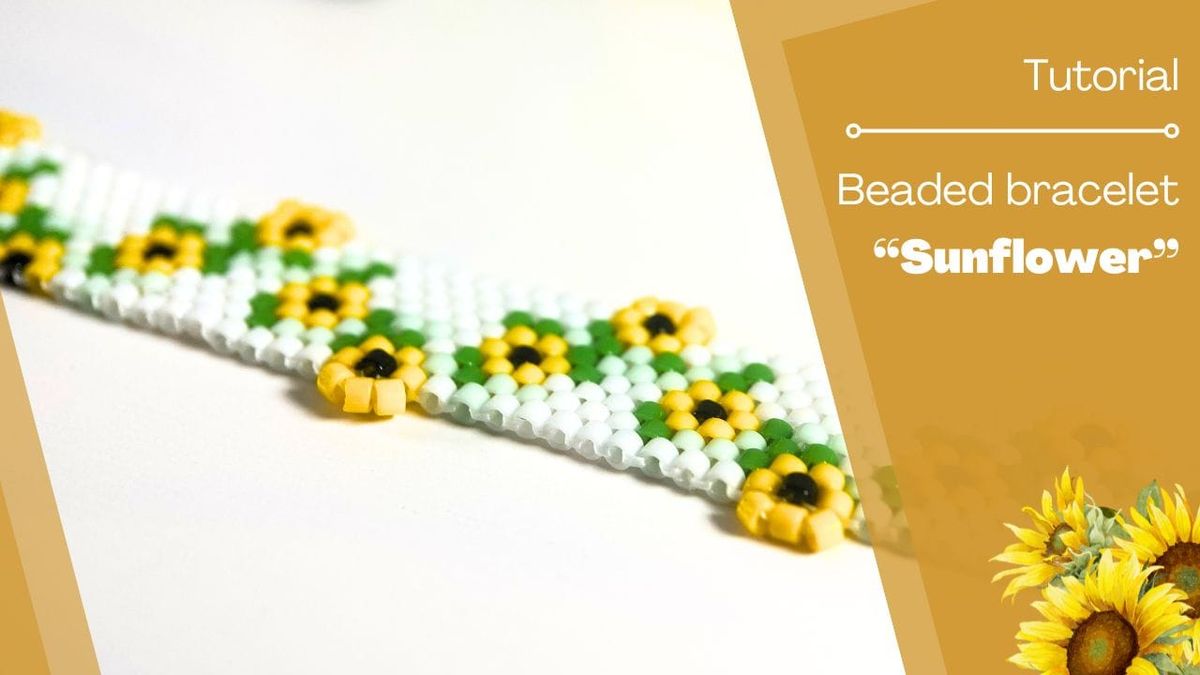
💛 Would you like to start with a ready-made sunflower design?
If you prefer to follow a complete chart instead of drawing your own, you can buy my Sunflower Bracelet Beading Pattern, designed for peyote stitch with Miyuki Delica beads.
You can combine that pattern with the one-bead start method from this tutorial.
Step-by-step: starting peyote stitch with one bead
This is an overview you can read alongside the video. It’s not a fully written pattern, but it explains the logic behind the one-bead start.
1. Anchor your first beadfully
- Thread your needle and leave a comfortable tail (about 15–20 cm).
- Pick up one bead and slide it close to the tail.
- Pass the needle through the same bead again so it becomes a small “stop bead” on your working thread.
You now have one bead securely anchored. This is the seed of the entire flat peyote stitch bracelet.
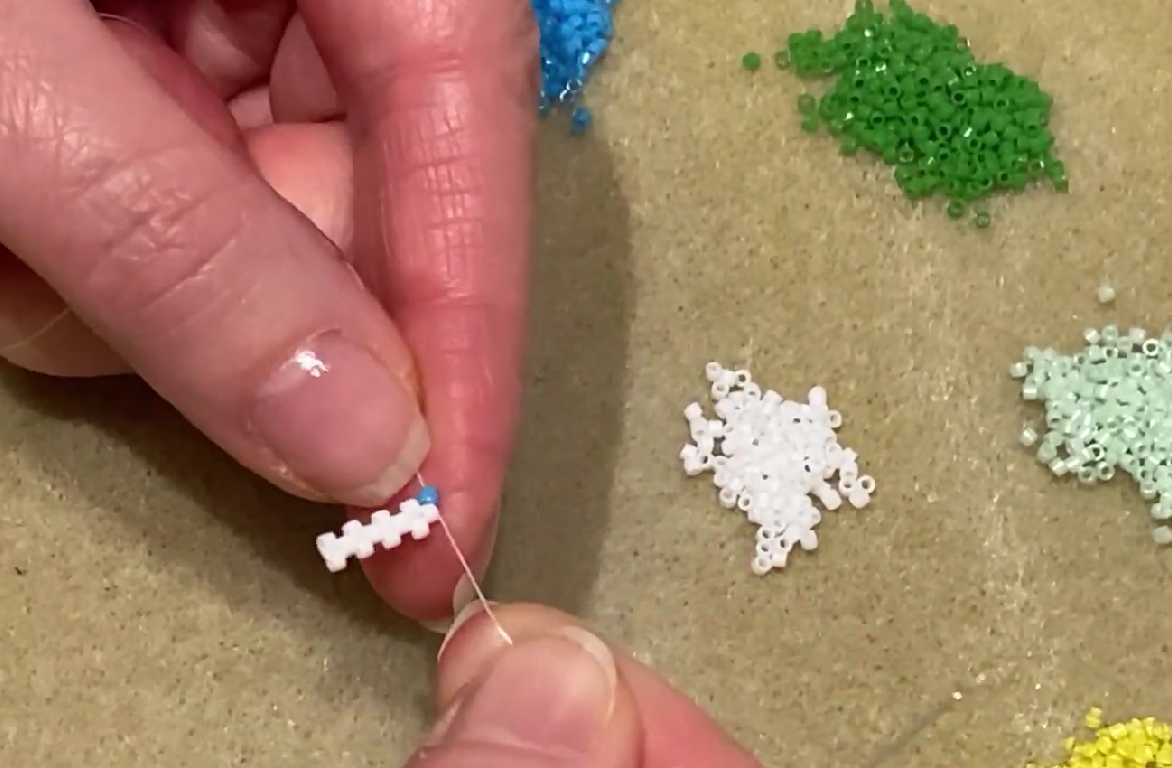
2. Build a tiny “ladder.”
- Pick up a second bead.
- Go back through the first bead, then through the second one again.
You’ve created a mini ladder stitch of two beads. It’s far easier to hold than a long loose row and gives you something solid to grip.
Repeat this motion:
- Pick up a new bead.
- Stitch up and down through the previous bead.
You’re forming a little column, or stack, of beads.
This stack can later become:
- A narrow seed bead peyote bracelet, or
- One side of a wider Miyuki Delica peyote bracelet pattern once you expand along its length.
3. Decide your bracelet width
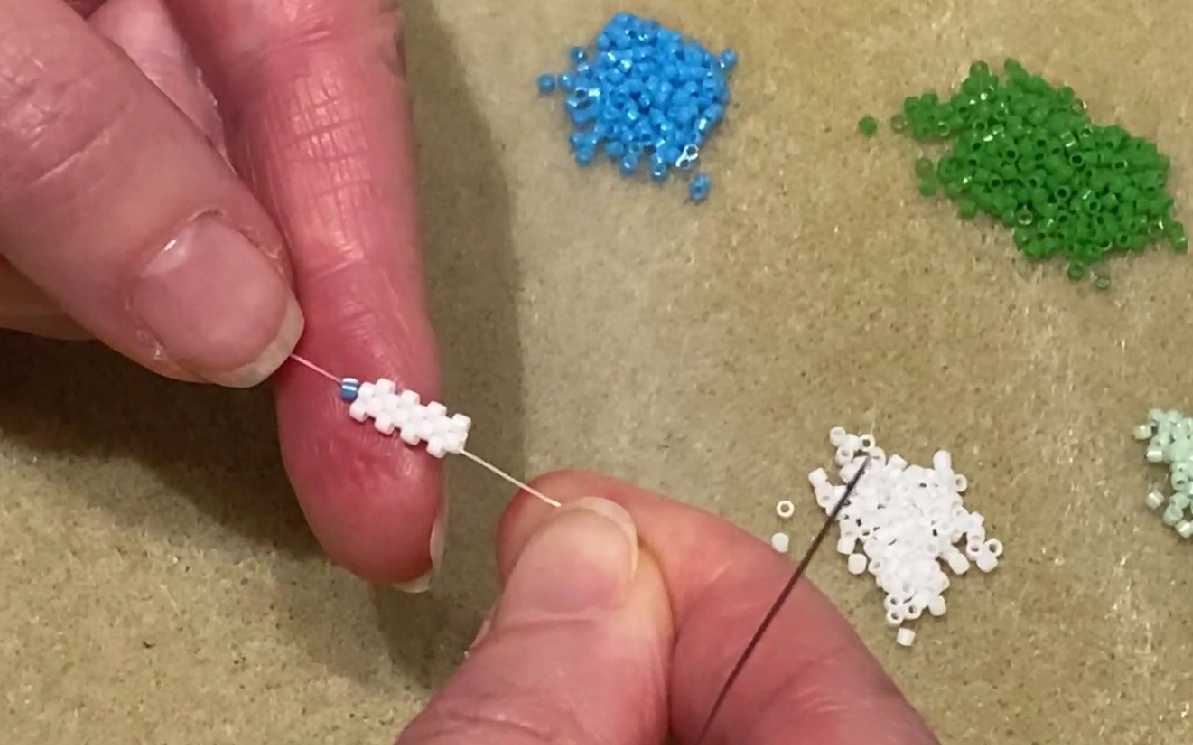
Keep adding beads until the stack is as tall as you want your bracelet to be wide.
For example:
- 6–8 beads high for a narrow band
- 12–18 beads high for a wider cuff, especially if you are using detailed peyote stitch bracelet patterns with motifs
Counting is much easier here: you only watch one tidy stack instead of a long, wiggly strand.
4. Turn the stack sideways and begin flat peyote stitch
Now turn your little stack sideways. Each bead in that stack becomes part of your base.
From here, you move into classic peyote stitch beading:
- Pick up a bead
- Skip one existing bead
- Stitch through the next bead that sticks out (“the high bead”)
Because the base came from a strong little stack, the work feels stable; beads don’t flop, and you clearly see where each new bead belongs.
Gentle tips for beaders
A few small adjustments make peyote stitch beading much kinder on the eyes, neck and hands:
- Short sessions are absolutely fine
Twenty or thirty minutes of beading is enough to enjoy the process and see progress—no need to finish a bracelet in one evening. - Use strong colour contrast at first
For your first peyote stitch bracelet pattern, choose bead colours that clearly contrast. Subtle tone-on-tone palettes look beautiful later, but high contrast makes learning easier. - Take breaks before you get tired
If your shoulders creep up or your hands start to ache, it’s a sign to pause, stretch, and maybe come back the next day. - Good light is a tool, not a luxury
A simple desk lamp or magnifying lamp can transform your experience—especially with tiny 11/0 beads.
What you can make once you master the one-bead start
When the starting step feels easy, you can comfortably explore more peyote stitch bracelet patterns:
- Simple stripe bracelets
Perfect for practicing even tension and colour placement. - Geometric designs using Miyuki Delica peyote bracelet patterns
Crisp diamonds, chevrons and abstract motifs look very polished thanks to the regular shape of Delica beads. - Floral and seasonal motifs
Sunflowers, leaves, snowflakes and more—all usually based on flat even-count or odd-count peyote stitch.
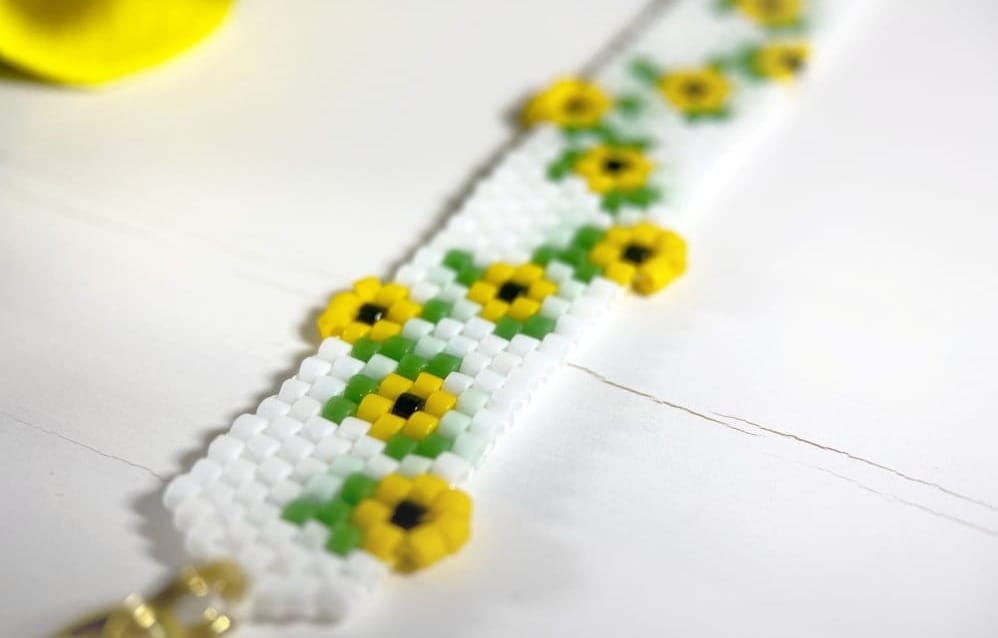
And of course, if you’d like to jump straight into a cheerful floral design, you can buy our Sunflower Bracelet Beading Pattern.
It’s written for peyote stitch with Miyuki Delica beads and includes diagrams, materials and thread paths to support you from the first bead to the finished bracelet.
A calmer way into peyote stitch
Peyote stitch doesn’t have to begin with a stressful, slippery first row.
By starting your flat peyote stitch bracelet with just one bead, you give yourself time to find the rhythm, feel the thread and enjoy the movement. It’s an approach that respects your pace—whether you’re beading after work, on a quiet weekend morning, or in a peaceful moment once the house is finally quiet.
So make yourself a cup of tea, lay out your beads, open the video “How to Start a Peyote Bracelet With Just One Bead!” and let this gentle method be your doorway into many future peyote bead patterns, bracelets and gifts.