
Before Match & Stitch, There Were Beads
Match & Stitch began with a bead obsession. See how Miyuki Delica colors, finishes, and haute couture embroidery shaped the concept behind the tool.
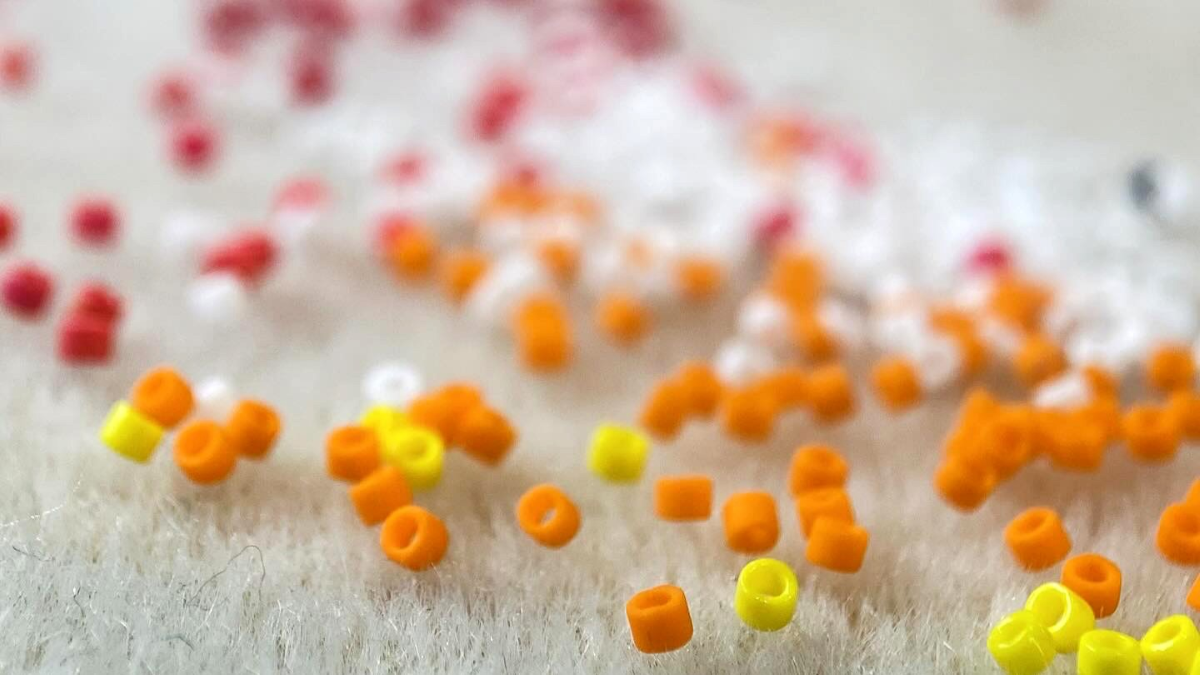
Friday confession: Match & Stitch didn't start with a grand product plan. It began with beads and the simple belief that an additional color or finish would be helpful. Beaders understand how that story often concludes.
My journey into making started with Miyuki Delica beads. Their consistent shape, high quality, and wide range of colors and finishes allowed me to create jewelry exactly as I envisioned. I explored three-dimensional forms, petals, stamens, and intricate sculptural details. With each experiment, the importance of different bead finishes became increasingly clear.
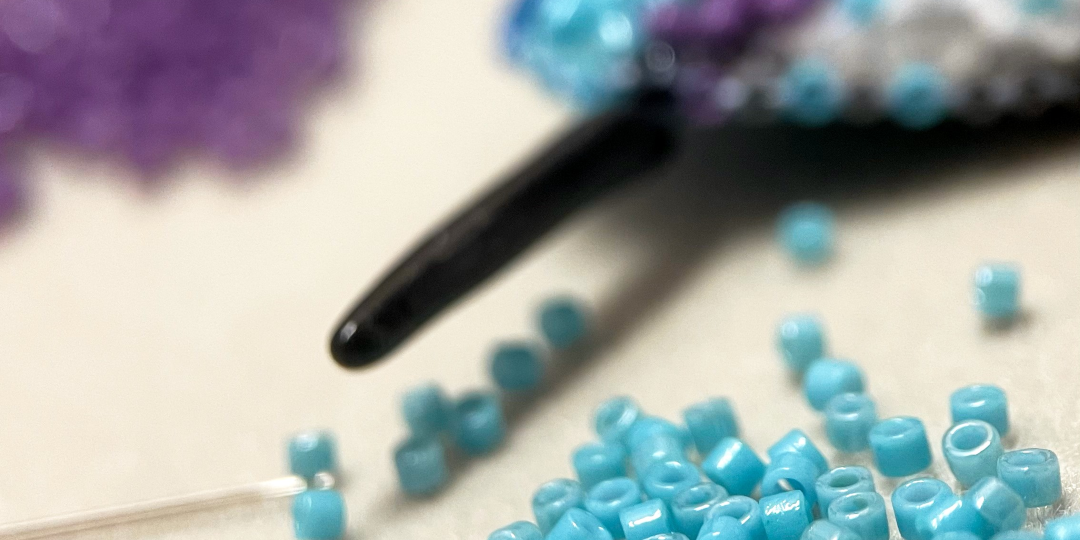
Color was only the beginning
Initially, my focus was primarily on color. Over time, finishes influenced my choices more significantly. A matte bead could subdue a shade, while a lustrous or silver-lined bead would reflect more light. Metallic finishes added richness and shine. Rainbow finishes appeared to shift with the viewing angle, whereas Picasso coatings introduced mottled, organic variation.
The size of the bead also played a role. Adjusting the size could introduce depth or change the rhythm of the surface, even when staying within the same color family. Selecting a bead no longer meant simply matching the color; it became a choice about how the material would function within the design.
When beadwork met haute couture embroidery
Later, when I started studying haute couture embroidery, everything fell into place. The intuitive work I had been doing combining beads, shaping forms, and adding sequins and threads was part of a larger, more complex language of embroidery.
That changed my perspective on materials. Thread, beads, sequins, and fabric no longer fit neatly into separate categories once they share a surface. They each reflect and absorb light differently and contribute texture at various scales. A single material choice can completely alter the mood of a whole section.
Why a thread-to-bead choice needs judgment
This is where the question behind Match & Stitch became clearer. Color is vital in embroidery, but choosing a thread-to-bead pairing involves more than just matching colors closely. A bead can work because it subtly continues the thread color or because its finish adds contrast, depth, or reflected light.
For instance, a deep golden-yellow thread might be complemented by a metallic gold bead. A chocolate-brown shade could harmonize with the natural variation of a Picasso finish. A celestial design might benefit from the shifting hues of a rainbow finish rather than a flat color.
These are creative decisions, not automatic conversions. The goal is to make the choice easier to understand without pretending there is always one correct answer.
How that became Match & Stitch
Match & Stitch originated from a blend of fascination and frustration. We are developing a method to compare Miyuki Delica beads with DMC and Anchor threads. When a close color match isn't available, the Creative Match category allows for a deliberate complement instead of a forced match.